
How to Translate a Long Novel Chapter by Chapter Without Losing Continuity
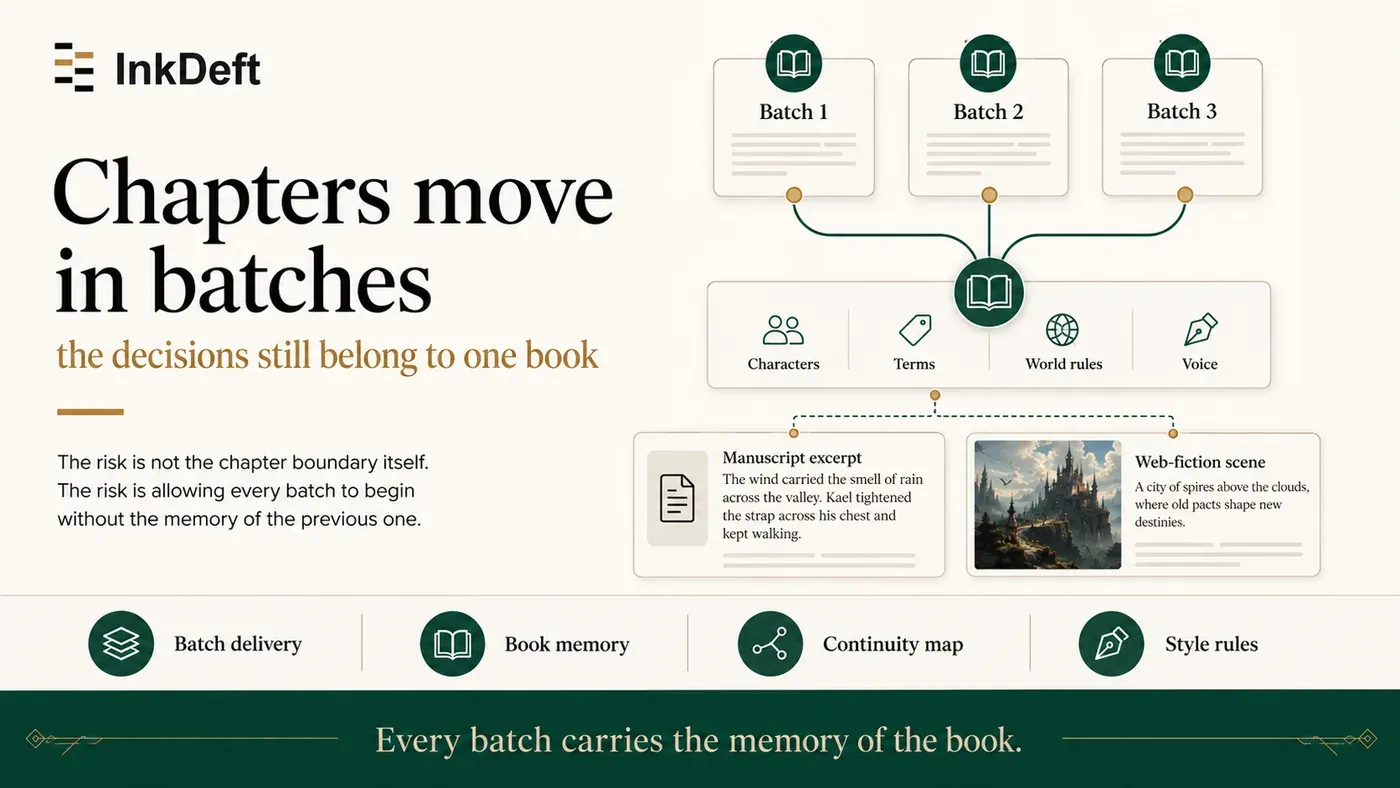
Chapters may be delivered in batches. The translation decisions behind them still need to belong to one book.
Long novels are rarely translated in a single pass. Phased delivery, rolling publication, and several contributors are normal. The risk is not the chapter boundary itself. The risk is allowing every batch to begin without the memory of the previous one.
A character introduced briefly in chapter twelve may return in chapter sixty using only a nickname and a reference to an old conflict. A translator working from the new chapter alone can create a new name, flatten the old resentment, or give the character a different voice.
Build a story reference, not a static glossary
Before production expands, the project needs a shared account of major characters, relationships, organizations, locations, abilities, artifacts, and recurring expressions.
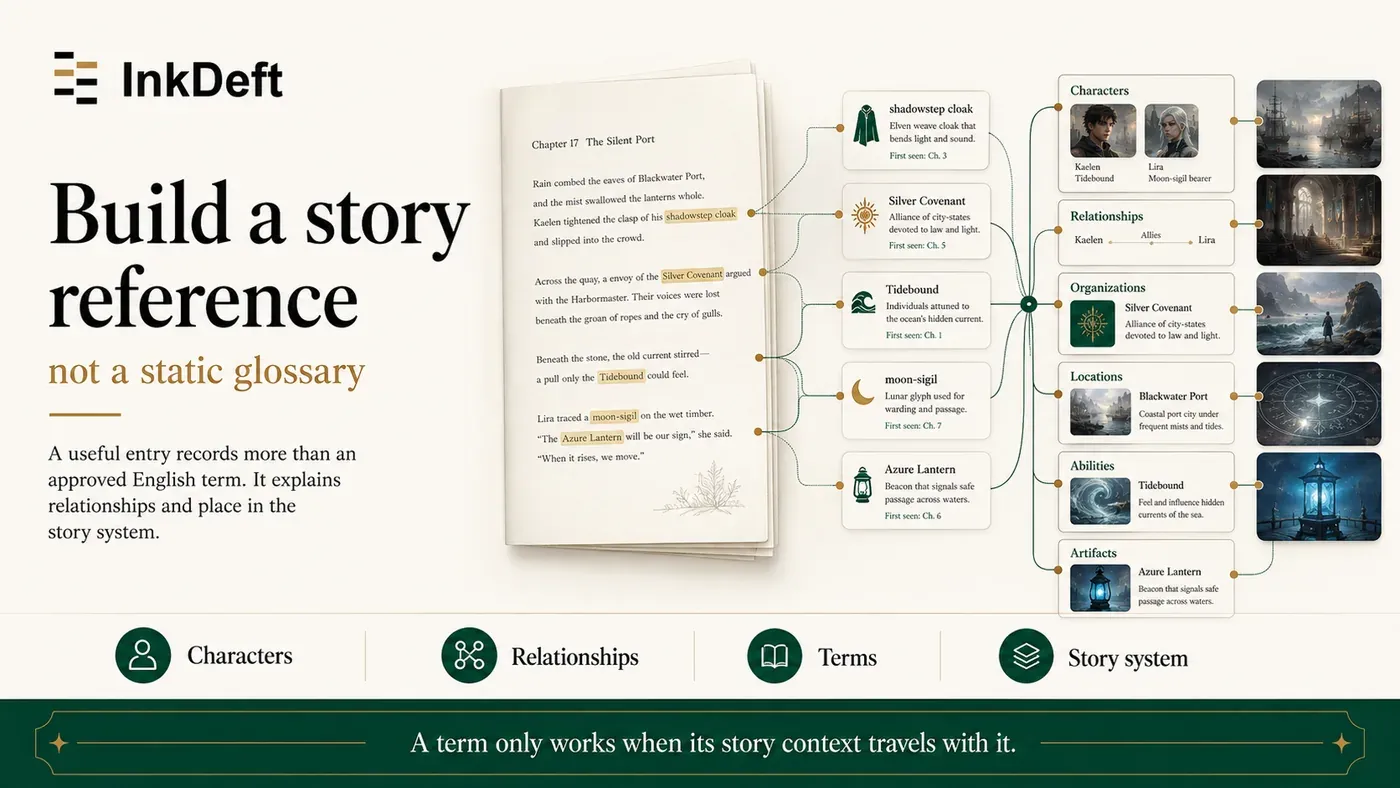
A useful entry records more than an approved English term. It explains who or what the term refers to, its relationships, and its place in the story system. That context helps later chapters use the term correctly when the source no longer repeats the explanation.
Track character voice and relationship changes
Using one character name consistently is only the beginning. Forms of address and dialogue style must also follow the story.
A subordinate may become an ally. A respectful title may give way to a personal name after a turning point. These changes are valid when the plot causes them. They are errors when they appear only because the translation moved into a new batch.
Character voice works the same way. A restrained speaker can become angry without suddenly sounding like a different personality.
Test every batch against distant chapters
Batch review should go beyond grammar and local fluency. It should ask whether returning characters reconnect to their earlier identity, whether new rules contradict the existing world, whether flashbacks point to the right facts, and whether the narrative style shifts at the handoff.
Finding a deviation now keeps the correction local. Finding it fifty chapters later can require reopening an entire character or terminology line.
Keep chapter delivery connected to whole-book context
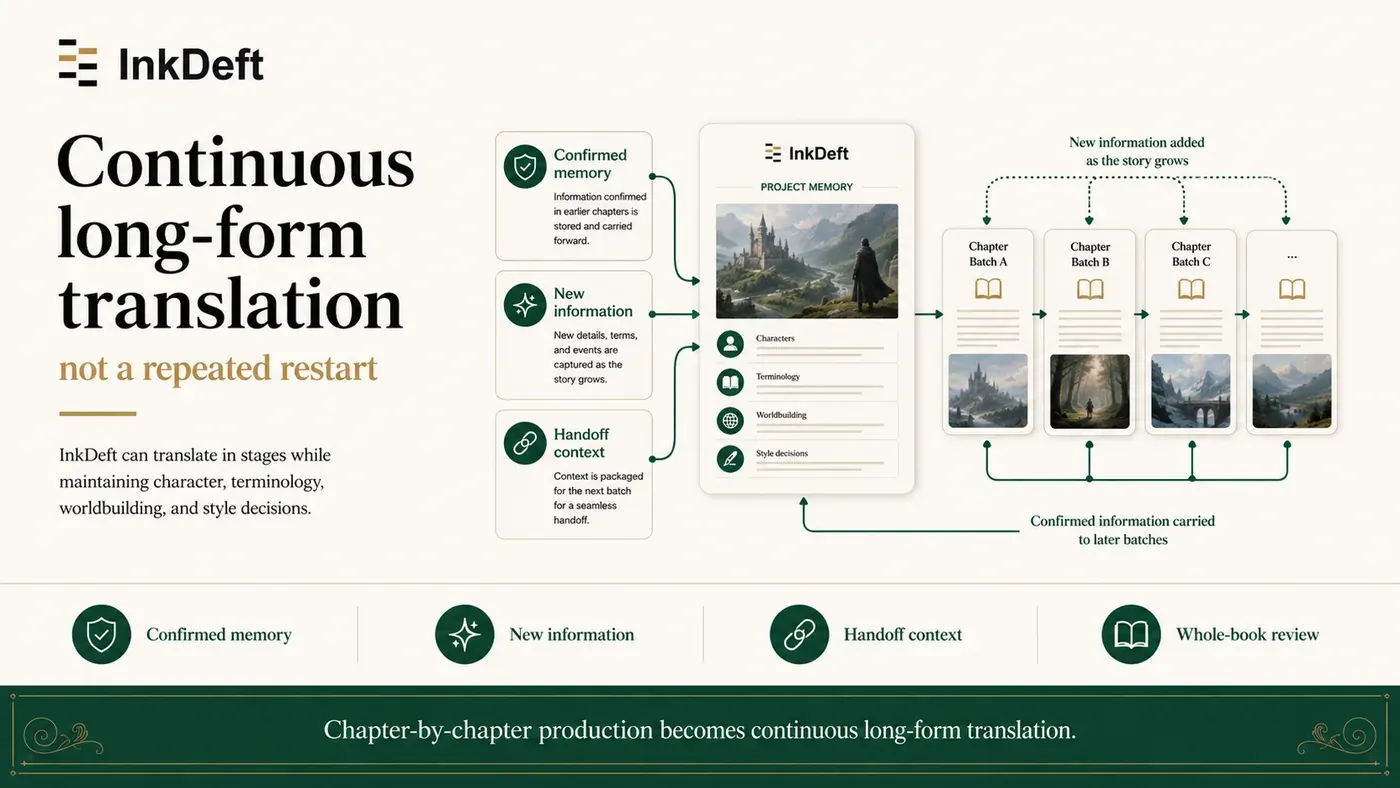
InkDeft can translate in stages while maintaining a shared set of character, terminology, worldbuilding, and style decisions. New information is added as the story grows; confirmed information remains available to later batches.
In collaborative projects, the handoff is therefore more than a folder of files. It carries what has been established, what has changed, and what remains deliberately unresolved. Chapter-by-chapter production becomes continuous long-form translation rather than a repeated restart.
Learn more about InkDeft
Visit the website: InkDeft official website
Submit your translation project: Contact us